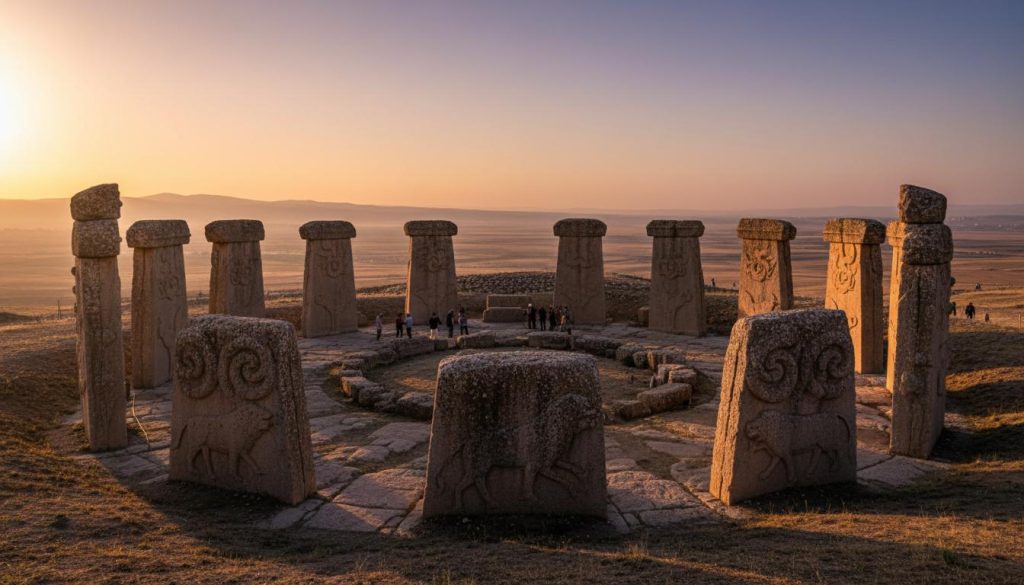
Göbekli Tepe is often described as one of the most disruptive archaeological finds ever made. Located in southeastern Turkey, this site is estimated to be more than 11,000 years old. That alone is extraordinary. But what makes it truly revolutionary is what was found there.
Massive T-shaped stone pillars stand in circular formations, many carved with detailed animal figures such as snakes, foxes, lions, and scorpions. The scale of construction is immense — some stones weigh several tons, requiring organized labor and planning that should not have existed at this time.
“Göbekli Tepe was built before agriculture was fully established in the region. It challenges the traditional timeline of human development — suggesting that symbolic thinking and large-scale coordination existed much earlier than expected.”
Experts still debate its purpose. Some suggest ritual gatherings. Others think it may have been a seasonal meeting point for early human groups. What is clear is that the people who built Göbekli Tepe possessed knowledge, skills, and social organization that archaeologists did not believe existed 11,000 years ago.
The discovery has forced a complete reconsideration of the relationship between religion, agriculture, and civilization. Perhaps organized religion came first — and agriculture followed, not the other way around.


