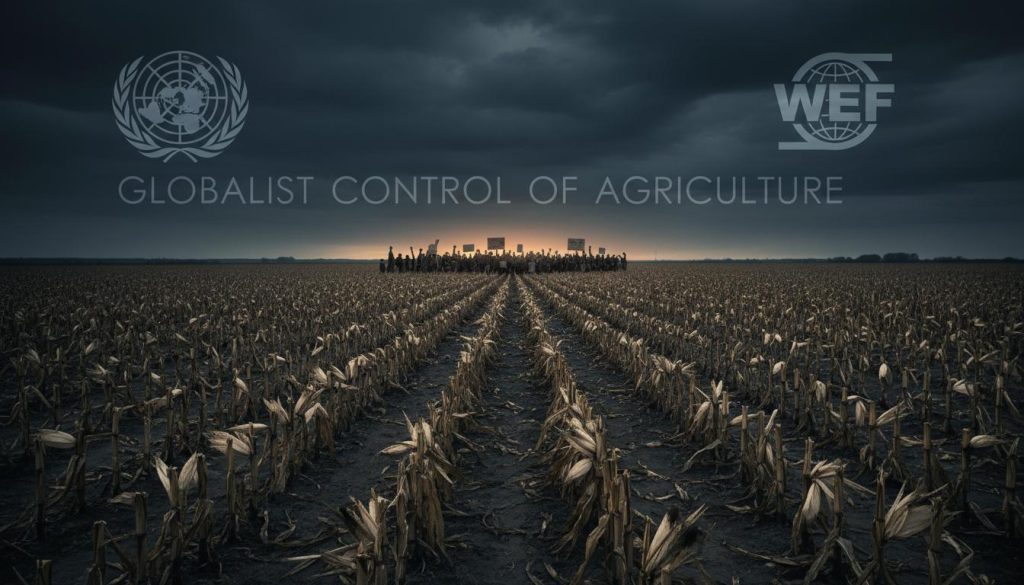
The United Nations’ “Agenda 2030” Sustainable Development Goals and the U.N.’s partners at the World Economic Forum (WEF) are directly related to the rising regulatory assault on agricultural producers from Holland and the United States to Sri Lanka and beyond.
In fact, a systematic campaign is being waged against independent farmers worldwide. The Netherlands, one of Europe’s largest food exporters, has seen thousands of farms threatened with closure under nitrogen reduction policies. Sri Lanka’s abrupt shift to “organic only” farming in 2021, heavily promoted by the WEF, led to catastrophic crop failures and economic collapse.
The policies are presented as environmental protection measures, but critics argue they are designed to consolidate food production under corporate control and eliminate small-scale independent farming.
The pattern is clear: nations that implement WEF-backed agricultural policies see immediate declines in domestic food production, increased dependency on imports, and the destruction of rural communities.
With Hungary halting grain exports and other nations restricting food trade, the global food supply is being systematically constricted — creating a crisis that only centralized global authorities claim they can solve.